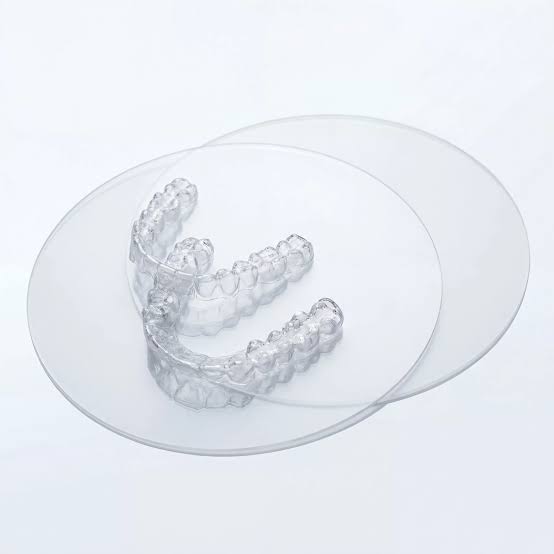
Aligner therapy has transformed the way orthodontic treatments are carried out. The treatment depends on the planning of aligner therapy by an orthodontist and the patient compliance. But one more important criteria is the material from which the aligner is made. The aligner sheets. Even though a small part of the whole process, it can affect many things and how the treatment turns out in the future.

What matters in Aligner Sheets:
Since our appliances are solely made of these sheets, they need to comply with some standards. Some of those are:
- Thermoformability: The sheet should heat consistently without losing its key properties.
- Biocompatibility: Since aligners are an intraoral device, they need to be safe. They should not leech harmful substances into the human body.
- Clarity: High clarity is important. As it must be a discreet and natural-looking appliance.
- Flexibility: Enough flexibility to adapt to the teeth. Also to support comfortable insertion and removal.
- Rigidity: Provides enough stiffness to maintain the planned shape during wear and carry out the tooth movement
- Dimensional stability: The sheet should retain its shape after thermoforming. And also during use.
- Durability: It should resist cracking and tearing, even during excessive wear and the treatment period.
- Stain resistance: Resistance to discoloration helps maintain appearance over time.
The Three Main Polymer Formulations
As technology has evolved, manufacturers have developed different formulations to meet the changing needs of dental labs and orthodontic cases. Three commonly discussed options are:
1. PETG
PETG is a popular choice because it offers a good balance of cost, stiffness, and ease of processing. It is relatively easy to thermoform.
Good-quality PETG sheets can also provide clear optical properties. They can also have consistent results after thermoforming.
For labs looking for a dependable material, PETG remains a practical option.
2. PU
Polyurethane (PU) sheets are generally chosen when flexibility and toughness are important. PU can stretch and flex more easily without cracking, comparatively
This flexibility can be useful when producing aligner cases with attachments and undercuts.
3. Multi-Layer Materials
Multilayer sheets combine more than one material layer. These sheets may feature a more durable outer layer along with a softer, more elastic inner layer.
The outer layer can help improve resistance to everyday wear. And the inner layer provides flexibility and comfort. This combination balances durability and elasticity. It is an option where both properties are important.
TAGLUS in the Aligner Sheet Market
Taglus is a global industry leader in the manufacture of innovative dental aligner and post-treatment retainer thermoplastic sheets. They are made using cutting-edge technology, and quality liquid resins for 3D printing. They also have international quality assurance certifications.
Taglus mainly deals with 4 main materials, each with different characteristics.
1. Taglus PU FLEX
Taglus PU Flex is a homogeneous polyurethane sheet made of flexible and rigid polymer segments. It has a uniaxially oriented amorphous structure. It supports consistent performance. It has the highest tensile stress at the break in its class. It also offers a balance of flexibility, strength, durability, and comfort.
2. Taglus Premium
It is a unique engineering combination of elasticity with rigidity and crack resistance. It offers the most optical clarity along with stain resistance for enhanced aesthetics. This meets the demands of both orthodontists and patients.
3. Taglus Standard
TAGLUS Standard is a high-performance copolyester. It has excellent transparency, chemical resistance, and superior processability. It has a high flexural modulus, which makes it durable and crack-free. It has the highest impact strength in the line, which makes it more resistant to deformation over time.
4. TAGLUS Tuff
Revolutionary engineered plastic, which has uniaxially oriented material with polymer chains locked together. It is in a non-specific lattice structure with the inclusion of glycol. This composition transforms the inner walls of the aligner/ retainer into a material more comfortable to the patient. So, TAGLUS Tuff uniquely combines elasticity with rigidity and clarity.
Choosing the Right Aligner Sheet
When choosing an aligner sheet, labs should consider many things. Clarity, stain resistance, strength and durability are some. They should also check its compatibility with their thermoforming equipment. Taglus offers Standard, Premium, and PU Flex options to suit different case and budget requirements.
Conclusion
Aligner sheets play an important role in the fit, comfort, appearance, and durability of clear aligners. Choosing the right material helps labs produce consistent results and meet patient needs.